
Valve Materials: Do There Have to Be So Many?
When it comes to choosing the right valves for your project, there’s a lot to consider. Valves serve many purposes and industries. And within each industry, they have numerous different functions. So while all CPV valves are manufactured to meet or exceed the highest quality standards, they’re not all the same.
Several factors come into play when making a decision about which valve will meet the requirements of the job for which they’re needed. Besides knowing the function or the action it will perform, it’s necessary to know the type of fluid or medium that it will be used for, the temperature of the substance, the pressure and flow rate, and the size of pipes or other equipment it will be connected to.
Armed with this information, you’ll be able to narrow down the options and select the product that will best suit your needs and provide the most return on investment.
One of the most important decisions you’ll make during this process is selecting the materials for the valve body and trim. Valves can be composed of materials ranging from cast iron to bronze to PVC. In valves like the ones CPV manufactures, there are typically two or more different metals in a single valve.
You may wonder why we don’t always use the “best” material for everything. It doesn’t quite work that way.
What’s best for one application might be the worst possible choice for another. And the “best” might not be the most cost-effective.
Factors Affecting Body Material Selection
Once you know what type of valve you need, the next step is to determine what metal or material will best suit the application.
Let’s look at some factors that will help guide this decision.
Resistance to Corrosion
Corrosion is the act of destroying, weakening, or wearing away a surface. It affects both the exterior and the interior of the valve.
In the external environment, air and moisture can lead to corrosion. In materials such as iron and steel, we see this in the form of rust. Many CPV customers have more than just the usual air and humidity to consider. Their businesses may operate in or near salt water. The harsh external environments to which their equipment is subjected accelerates the rate of corrosion. If you’ve ever owned a vehicle and lived near the sea or in a cold climate where the roads are frequently covered with salt to melt snow and ice, you know that when salt combines with water and air, rust appears even faster on an automobile’s steel parts.
But exterior corrosion in the form of rust isn’t the only concern. When a substance is flowing through a valve, corrosion can occur from the inside as well. The rate and degree of internal corrosion are dictated by the type of substance flowing through the valve. Sweet crude oil for example (crude oil containing low amounts of sulfur), is non‐corrosive and actually helps to protect the metal surfaces it contacts. Strong acids like sulfuric acid, on the other hand, can eat through some metals in a matter of hours.
Strength of the Material
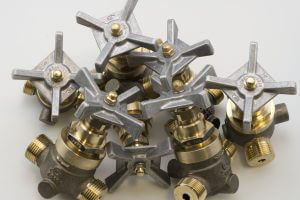 There are two general measures of strength that play a role in valve material selection. Tensile strength is its stretchability or resistance to breaking when it’s stretched. If it can be stretched a little without breaking, it’s ductile. Copper is an example of a metal with good ductility, which allows it to be stretched into a wire. If a material doesn’t stretch, it’s brittle, like a ceramic plate that shatters rather than bends when it collides with a hard surface.
A valve’s body has to be able to withstand the pressure from inside. That’s where its tensile strength comes into play. A metal such as cast iron may seem like a good choice, but it’s brittle and cracks under too much pressure. In operations where high pressure is a factor, the material used must have good ductility. Knowing the pressure during operation is essential in selecting the right valve material.
Operating temperature also affects a metal’s strength and is another important factor in determining its suitability for a valve. In general, as the temperature increases, the metal softens and weakens. If it’s too cold, the wrong metal becomes brittle. So the temperature limits of the valve material must be aligned with the temperature at which it will be operated.
For example, a low-‐grade carbon steel can handle 285 psi at 100 degrees F, but that number drops to merely 50 psi at a temperature of 900 degrees F. Long exposure to high temperatures can also change some carbon steels to graphite. Depending on the particular metal, the tolerance range, as in the case of cast iron, may be as limited as ‐20 to 410 degrees F. On the opposite end of the spectrum, certain stainless steel alloys have a broad range, from as low as ‐425°F to as high as 1500°F.
Resistance to Erosion
With each component of a valve serving a unique function; and therefore being subjected to somewhat different conditions, special materials are usually required for a valve’s trim (the closure elements or parts such as the stem, seat, and disc). In addition to strength and corrosion resistance, the trim is more susceptible to erosion.
Similar to corrosion, erosion is wear caused by a mechanical action or the repeated application of localized stress. In other words, a substance breaking down a solid material due to pressure and repeated action, rather than a chemical reaction.
Sandblasting is a form of erosion. Dirt or other abrasive particles contained in a substance will contribute to metal erosion.
The effects of erosion are amplified on trim closure elements. As a valve closes, the velocity of the substance flowing through it increases, like putting your thumb over the end of a running water hose to make the water spray out with more pressure. This increased velocity causes wear in the form of erosion.
CPV Manufacturing is committed to making only the best quality valves and fittings. We design them with versatility in mind so that our products are perfect for many industries, purposes, and settings including the harshest of environments. Whatever your needs, you can trust CPV to provide the highest quality products to satisfy them.
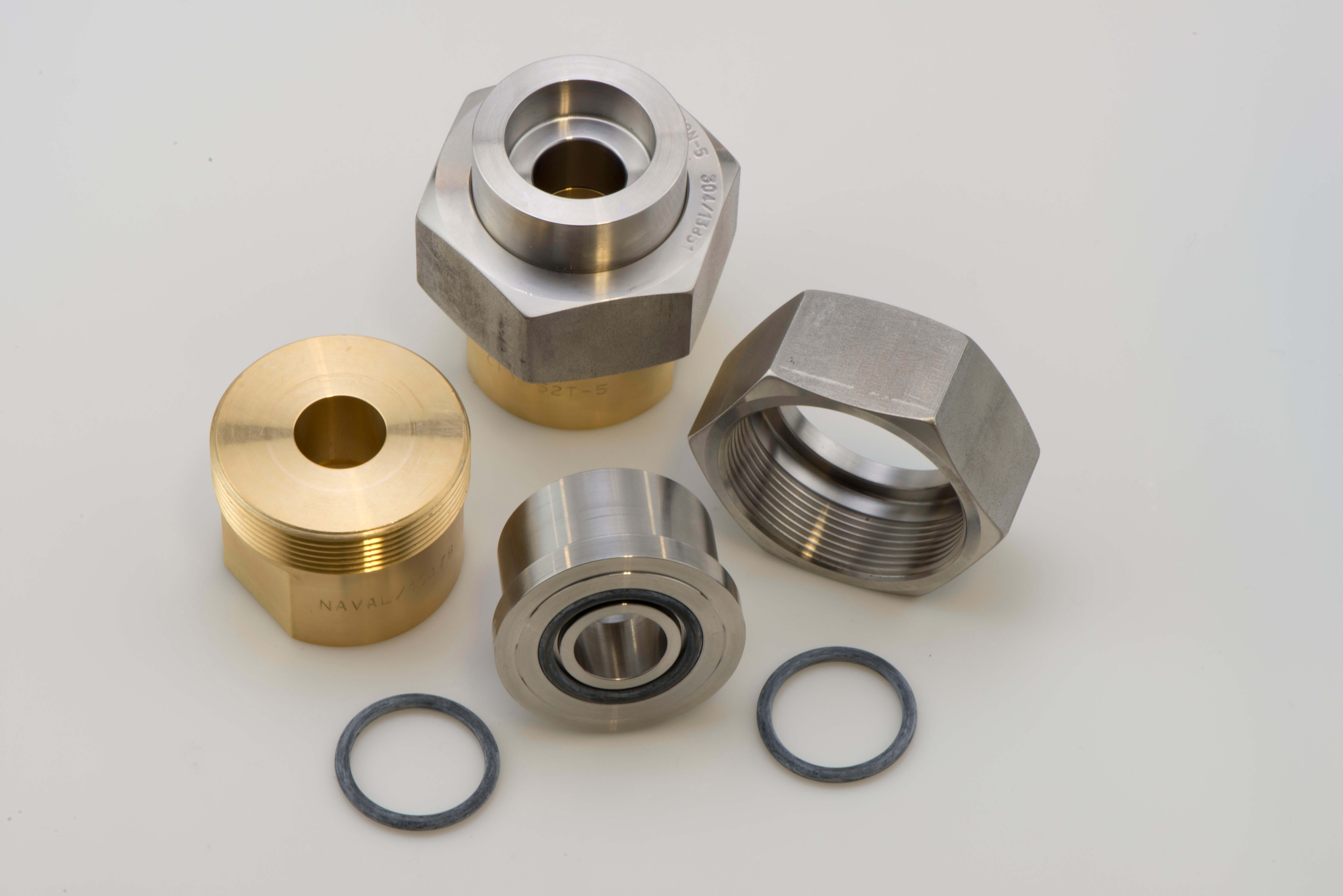 Does your familiarity with valves start and end with a dictionary definition? If you’re reading this article, probably not. But just in case, here’s Merriam-‐Webster’s take on valves:
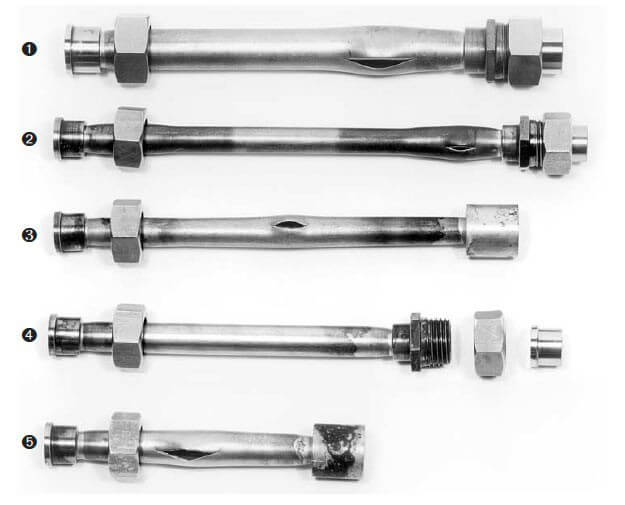 The entire O-‐SEAL line of shut off, needle, check and relief valves are rated for vacuum to 6,000 psi (413 BAR) in liquid or gas service. But they’ve been tested to much higher pressures without failure. CPV’s Mark VIII O-‐SEAL fittings, for example, when heat sealed into a system by welding, orbital welding or brazing, can sustain in excess of 16,000 psi. Just take a look at the picture to the left and the chart below. In this test, Mark VIII O-‐SEAL fittings were brazed—the most basic heat-‐sealing technique, requiring only a handheld propane torch—to brass, copper, steel and stainless steel tubing. In every test, the tubing failed while the Mark VIII fittings remained intact. And in every test, the burst pressures far exceeded the fitting 6,000 psi pressure rating. You’ll notice the test using 1/16” stainless steel tubing with a steel Mark VIII threadpiece had to be terminated at a whopping 28,000 psi!
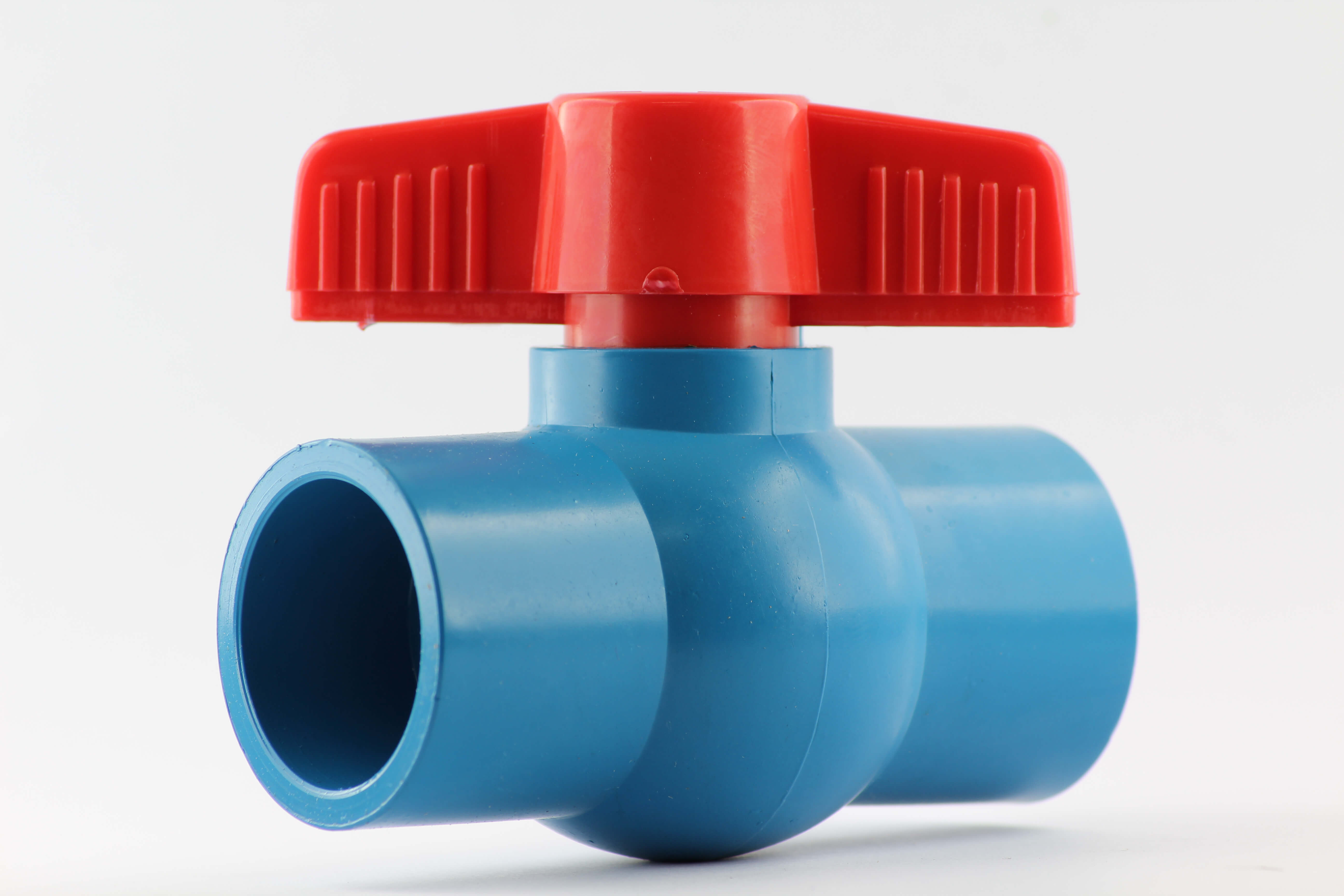 Plastic valves have become increasingly popular for certain media and applications. And while CPV doesn’t manufacture plastic valves—they lack particular qualities necessary to the industries we serve—we can still discuss their advantages and disadvantages when compared to metal valves. You might think the title of this article is a spoiler if you’re fond of rhymes. Is it? You’ll need to read on to find out.
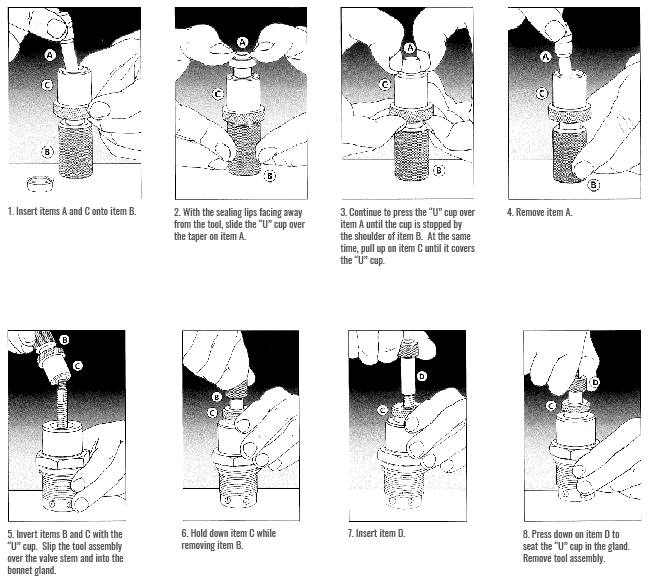
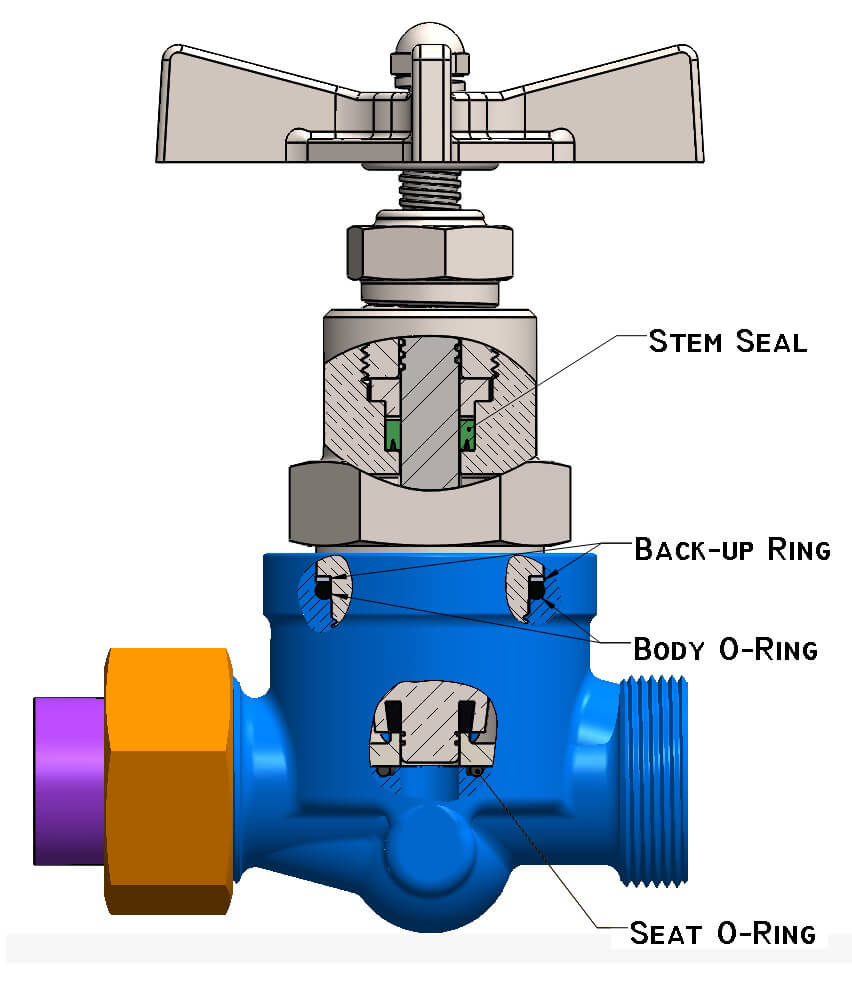 A failing valve is not just troublesome, it is a potential weak link in an otherwise robust chain. Some of the smallest parts within an already compact valve are those most crucial to a system’s overall performance—they have the power to ensure smooth operation or result in catastrophic failure. It is essential, then, to maintain the performance of your valves by replacing soft goods both when necessary and proactively. And you should always follow the practice of installing soft goods kits that are designed and manufactured according to the specifications set forth for the exact valve you are servicing. Read on to learn more about the advantages of using soft goods kits.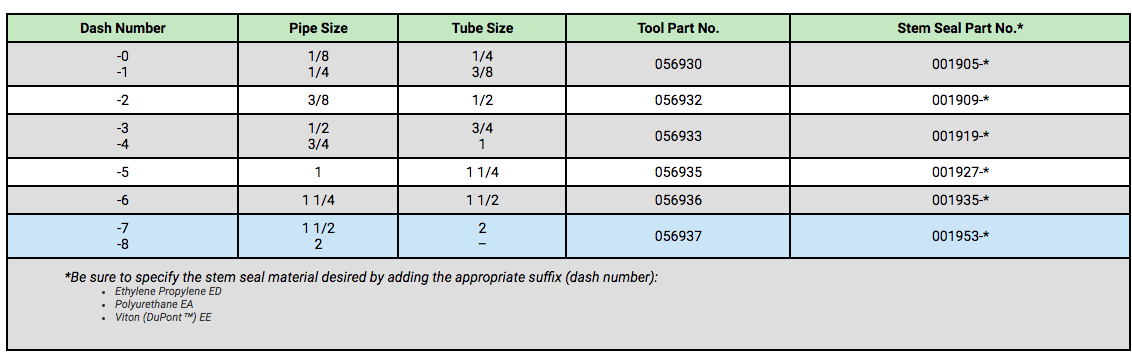
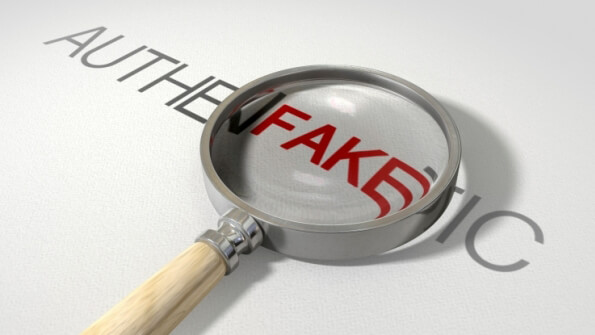 From iPhones to watches to shoes and apparel, it seems that for every legitimate product on the market, there are twice as many cheaply made counterfeits. And believe it or not, industrial valve manufacturers have not remained immune to this problem. The market is saturated with counterfeit valves and fittings, but it can be difficult to know how many are out there. Many simply go undetected, only recognized for what they are once they fail. And even when counterfeit valves or fittings do fail, under-reporting of these incidents seems to be somewhat prevalent. While most end users whose valves have failed were probably unaware the products they used were counterfeits, others may forego reporting for risk of damaging their reputation or being seen as negligent.
 Whether for use in valves or otherwise, whether organic or synthetic, lubricants always serve the same purpose: reduce surface-to-surface friction. In valves, however, proper lubricant use and maintenance is especially important given the extremely tight tolerances to which they are manufactured and the often demanding conditions under which they are operated.
 When a
 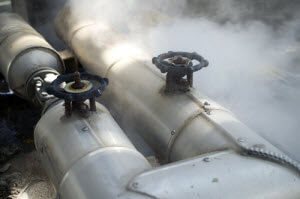 After you’ve determined the cause of the leak, you can start repairing the valve. According to federal leak detection and repair standards, companies have five days to perform the first repair attempt.
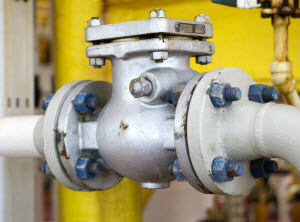 To really understand the question: how does a check valve work, you must first understand how they’re constructed. Most check valves are made with a body, seat, disc, and cover. Other types of check valves may come with additional parts like a spring, ball, stem, or hinge pin depending on their design.
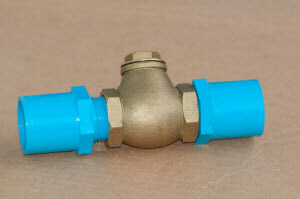 While all check valves are designed to ensure proper flow direction, they’re not all the same. There are many
 Even with new technologies and design upgrades,